
Baby Drinks Market Overview
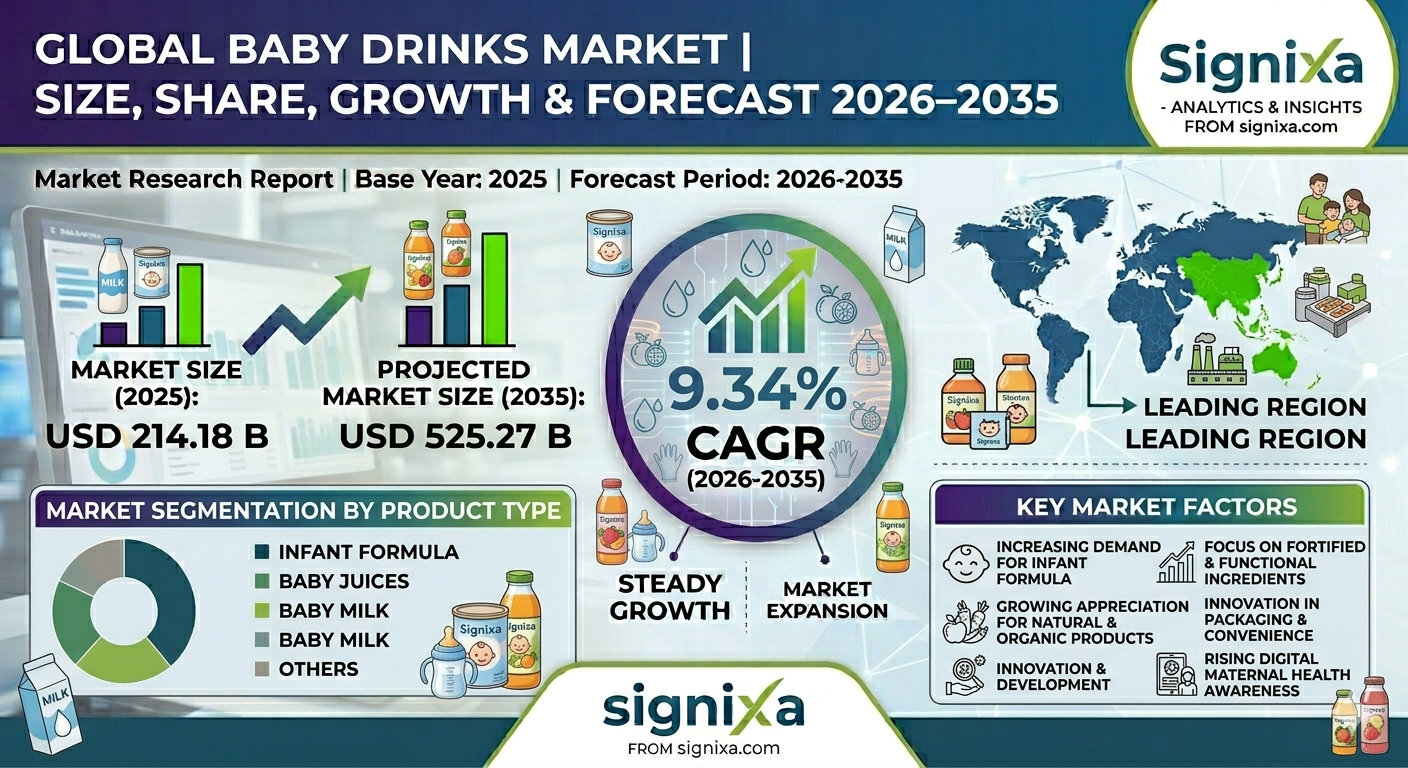
The size of the global baby drinks market was worth around USD 214.18 billion in 2025 and is predicted to grow to around USD 525.27 billion by 2035, with a compound annual growth rate (CAGR) of roughly 9.34% between 2026 and 2035. The report analyzes the baby drinks market's drivers and restraints, as well as the impact they have on demand throughout the projection period. In addition, the report examines global opportunities in the baby drinks market.
The baby drinks segment consists in a variety of drink products for the infant and toddler age group including baby formula, fruit juices, electrolyte drinks, and ready-to-drink (RTD) or concentrate-based drinks. Growing demand for nutritious, safe, and convenient feeding solutions for emerging households with working parents is driving the baby drinks market. An increased awareness of infant health and nutrition is triggering innovation in baby drinks and increased consumption of fortified and organic baby drinks in various markets.
The baby drinks market is experiencing steady growth driven by increasing awareness among parents about infant nutrition and the demand for specialized beverages catering to different age groups and dietary needs. Products in this market include infant formula, toddler drinks, fortified milk, flavoured waters, and organic juices, designed to provide essential nutrients, hydration, and support healthy development. Parents are increasingly seeking clean-label and natural ingredient options, prompting manufacturers to focus on organic, non-GMO, and allergen-free formulations. Innovation plays a key role, with companies developing products that offer added vitamins, minerals, probiotics, and plant-based alternatives to address specific health concerns like digestion, immunity, and lactose intolerance. Packaging innovations such as easy-to-use bottles and environmentally friendly materials also attract consumers.
The rise in dual-income households and working parents has increased demand for convenient, ready-to-drink baby beverages. Additionally, growing urbanization and rising disposable incomes in emerging markets contribute to expanding consumer bases. Regulatory oversight ensures safety and quality, which further builds consumer trust. Overall, the baby drinks market reflects evolving parental preferences for nutritious, convenient, and trustworthy options, fuelling product diversification and competitive innovation among manufacturers globally.
Key Findings
- As per the analysis shared by our research analyst, the global baby drinks market is estimated to grow annually at a CAGR of around 9.34% over the forecast period (2026-2035).
- In terms of revenue, the global baby drinks market size was valued at around USD 214.18 billion in 2025 and is projected to reach USD 525.27 billion by 2035.
- The market is projected to grow at a significant rate due to increasing demand for nutrition-rich, convenient feeding solutions for infants.
- Based on Product, the Baby Formula segment is expected to dominate the global market.
- On the basis of Distribution Channel, the Hypermarket & Supermarket segment is projected to command the largest market share.
- By Region, Asia-Pacific is expected to remain the largest and fastest-growing regional market.
Baby Drinks Market Dynamics
Growing Awareness of Infant Nutrition & Fortified Feeding Solutions
The growing awareness regarding infant nutrition is a significant factor driving the worldwide baby drinks market. Parents are becoming more concerned about child growth and are willing to invest increased sums in higher quality nutritional beverages. According to UNICEF, child malnutrition is still an issue in low- and middle-income countries, and this leads to the rise of fortified baby drinks. Furthermore, increased awareness regarding hydration and balanced electrolytes are driving growth in electrolyte-based baby drinks.
Rising Number of Working Mothers & Demand for Convenient RTD Options
Another significant factor is the increasing number of working moms, especially in cities, which is creating a growing demand for alternative feeding methods. Products like ready-to-drink formulas and shelf-stable juices are becoming more popular because they offer portability and ease of use with minimal prep time. In the United States, for example, nearly 70% of moms with kids under the age of 18 are employed, providing companies with access to the rapidly changing lifestyles of young parents.
Innovation, Organic Formulations & Regulatory Quality Standards
The market growth is also supported by technological advancements and innovation in products related to infant nutrition. Companies are investing in R&D for the development of products that are organic, non-GMO, allergen-free, and probiotic-rich that serve health-conscious consumers. This innovation is pertinent to the trends involving clean-label products that are increasingly favoured in developed economies. Regulations also play a role, as mandated higher safety standards for baby nutrition force many manufacturers to improve quality and transparency of products.
Baby Drinks Market Segmentation Analysis
By Product Type Segment Analysis
Baby Formula
The Baby formula segment is the largest product type segment in the market, with a revenue share of more than 60% of global revenue in 2025. Baby formula is the most essential substitute for breast milk for infants and is particularly useful in households where breastfeeding is not a feasible solution. The segment is anticipated to retain its dominance because of rising awareness of infant nutrition and growing birth rates in developing countries. Brands are continuously upgrading formulas for infants with DHA, ARA, iron, and probiotics to promote immunity and cognitive development.
Juice -RTD (Ready-to-Drink)
The RTD baby juice category is trending with busy parents due to its convenience and shelf-stability. Many of these juices include natural fruit extracts and are fortified with essential vitamins and minerals. In 2025, the RTD category represented approximately 15% of the juice category. Increasingly health-conscious parents are selecting no-sugar-added and organic options, especially in North America and Europe, which value clean-label options.
Juice -Concentrate
Concentrated juice formats are low-cost hydration solutions and readily accepted in price-sensitive environments. These are processed and then mixed at home from a concentrate, and most contain added vitamin C and calcium. In countries where consumers typically purchase basic products in bulk because of limited disposable incomes or to help cut costs otherwise spent daily, juices in this concentrated form are even more common. Although growth rates are not as brisk as with ready-to-drink (RTD) products, concentrated juices is an important part of juice, especially when considering long periods of delivery and price.
Electrolyte
Baby electrolyte beverages are intended to supply body fluids during dehydration and illness. Baby electrolyte beverages are niche products in the beverage market but are increasing in popularity for rehydration for infants and children, particularly in tropical environments or developing countries with high rates of infant diarrhea and heat-related illnesses. In 2025, electrolyte beverages made up about 8% of the whole juice market. More exposure to the electrolyte beverage category is happening with paediatricians recommending electrolyte beverages during rehydration therapy.
By Distribution Channel Segment Analysis
Hypermarket & Supermarket
In terms of distribution channel segmentation, this segment had the largest market share in 2025, with an almost 50% contribution to global revenue. Parents like these channels because they allow for an easy product comparison and more access to variety of brands in a single location. The ability to find promotional pricing and bundled product offerings in retail stores also encourages impulse purchases for parents. The segment will continue to grow steadily as urbanization and retail penetration will increase in the Asia-Pacific and Latin American markets.
Pharmacies
Pharmacies have emerged as a reliable point of distribution for infant products by being seen as more credible and suggesting they have some expert guidance. They accounted for roughly 25% of total sales in 2025. Parents also rely on pharmacies for information and advice on what to feed baby when it comes to specialty or prescription baby formula. Growth is especially observed in Europe and the Middle East where retail and healthcare have been even more integrated.
Online
Online marketplaces are the fastest-expanding channel, with a growth rate above 12% CAGR between 2026 and 2035. E-commerce offers convenience, home delivery, and access to niche or premium baby food and beverage brands. Parents who shop online are increasingly reading reviews, comparing products by ingredients, and taking advantage of model purchases. This segment gained a rapid boost during COVID-19 and continues to grow from adopting mobile shopping and logistics improvements.
Report Attributes & Market Scope
| Report Attribute | Details |
|---|---|
| Market Size Value in 2025 | USD 214.18 Billion |
| Market Size Value in 2035 | USD 525.27 Billion |
| CAGR (2026-2035) | 9.34% |
| Base Year Used for Estimation | 2025 |
| Historic Data | 2020 -2025 |
| Forecast Period | 2026 -2035 |
| Segments Covered -By Product Type |
|
| Segments Covered -By Distribution Channel |
|
| Regions Covered | North America, Europe, Asia Pacific, Latin America, Middle East and Africa |
| Major Countries Covered | U.S., Canada, Mexico, Germany, UK, France, Italy, Spain, Russia, China, Japan, South Korea, India, Southeast Asia Countries, Brazil, Argentina, GCC Countries, Turkey, Iran, Israel, South Africa, Egypt, Nigeria, etc. |
| Key Companies Profiled | Nestle S.A., Abbott Laboratories, Mead Johnson Nutrition, Danone S.A., Hero Group, The Kraft Heinz Company, FrieslandCampina, Arla Foods, Hain Celestial Group, and DANA Dairy Group. |
Baby Drinks Market Regional Analysis
The worldwide baby drink market is developing in all global regions with Asia-Pacific, the largest region, showing the most growth, especially due to having the highest birth rates, a growing middle class, and increasing urbanization. North America and Europe are established and mature markets, where innovation including organic and functional baby beverages drives growth, coupled with high levels of health consciousness among parents. Latin America and the Middle East & Africa are developing markets, and the demand is rapidly increasing as healthcare access is improving, income is rising, new initiatives are combating infant malnutrition through nutritional baby drinks.
Asia-Pacific (Largest Region)
The Asia Pacific baby drinks market is witnessing significant growth, fuelled by rising birth rates, increasing health awareness among parents, and expanding urban populations. Rapid economic development in countries like China, India, Japan, and Southeast Asia has led to higher disposable incomes, enabling more parents to invest in premium and specialized baby beverages. The growing middle-class population is demanding nutritious, organic, and safe products tailored to infants and toddlers, driving manufacturers to innovate with fortified formulas, probiotics, and plant-based options. Convenience is a major factor influencing consumer behaviour in this region, with busy, working parents preferring ready-to-drink and easy-to-use packaging formats. Additionally, the increasing presence of international brands alongside local players intensifies competition and product variety. Cultural preferences also shape the market, with some countries favouring traditional ingredients or formulations adapted to regional tastes. Government regulations and safety standards in countries like Japan and Australia ensure product quality and consumer confidence, while emerging markets are tightening guidelines to protect infant health. E-commerce platforms and modern retail channels have enhanced product accessibility, especially in remote areas, further expanding the market reach. Moreover, rising awareness about allergies and dietary intolerances has led to an increase in demand for hypoallergenic and lactose-free baby drinks. Marketing campaigns focused on nutritional benefits and maternal education support continued market expansion. Overall, the Asia Pacific baby drinks market is evolving rapidly, marked by dynamic consumer preferences, product innovation, and increasing investments in health and safety standards, positioning it as one of the fastest-growing regions globally.
North America
The North America baby drinks market is experiencing steady growth driven by increasing parental focus on infant nutrition and health. High awareness about the importance of early childhood nutrition, coupled with rising disposable incomes, encourages parents to invest in specialized baby beverages that support growth and development. The U.S. and Canada are the primary contributors to this market, where consumers demand a wide range of products including fortified formulas, organic options, and plant-based baby drinks tailored to infants and toddlers. The region's market is influenced by stringent regulatory frameworks enforced by agencies like the FDA and Health Canada, which ensure safety, quality, and accurate labelling. This boosts consumer confidence and drives the adoption of innovative products with added nutritional benefits, such as probiotics, DHA, and prebiotics. Additionally, the rising prevalence of dietary allergies and intolerances among infants has increased demand for hypoallergenic and lactose-free baby drinks. E-commerce and modern retail channels, including specialty baby stores and pharmacies, play a crucial role in improving product accessibility and convenience for parents. The busy lifestyle of modern families has fuelled demand for ready-to-drink and easy-to-use packaging formats. Moreover, marketing efforts focusing on the benefits of natural and clean-label products resonate strongly with health-conscious consumers. Manufacturers in North America are investing heavily in research and development to innovate new formulations that meet evolving consumer needs. Collaborations with healthcare professionals and paediatricians also help in building trust and credibility. The combination of regulatory support, consumer awareness, and product innovation is propelling the North America baby drinks market toward consistent expansion.
Europe
The Europe baby drinks market is witnessing notable growth due to rising health awareness among parents and an increasing preference for premium, organic, and natural products. Countries such as Germany, France, the UK, and Italy dominate this market, driven by high disposable incomes and well-established healthcare infrastructure. European consumers prioritize safety, nutrition, and quality, with a growing inclination toward products enriched with probiotics, vitamins, and minerals to support infant development. Strict regulatory standards imposed by the European Food Safety Authority (EFSA) ensure product safety, efficacy, and transparency in labelling, enhancing consumer trust. These regulations push manufacturers to innovate with clean-label formulations and transparent ingredient sourcing. Organic and plant-based baby drinks are gaining traction, reflecting the increasing demand for allergen-free, lactose-free, and vegan options to cater to infants with dietary restrictions. Retail channels in Europe are evolving, with a strong presence of both traditional supermarkets and specialty baby stores, alongside rapid growth in e-commerce platforms that offer convenience and variety. This shift enhances product accessibility, particularly among urban and working parents. Additionally, demographic trends such as declining birth rates in some regions encourage companies to focus on premiumization and value-added product development to maintain growth. Investments in research and development are increasing, with an emphasis on nutritional innovation and sustainable packaging to align with environmental concerns. Collaborations between manufacturers and healthcare professionals help in product validation and consumer education, boosting market credibility. Overall, the Europe baby drinks market is set for steady growth, supported by health-conscious consumers, regulatory oversight, and ongoing innovation.
Middle East & Africa
The Middle East & Africa baby drinks market is experiencing steady growth, driven by rising population, increasing urbanization, and growing awareness about infant nutrition and health. Countries like Saudi Arabia, UAE, South Africa, and Egypt are key contributors, with expanding healthcare infrastructure and rising disposable incomes supporting market demand. Parents in this region are increasingly seeking safe, nutritious, and convenient baby drink options that cater to the specific dietary needs of infants and toddlers. The market is witnessing growing adoption of premium and organic baby drinks, reflecting a shift towards healthier lifestyles and preventive healthcare. There is also a rising preference for products enriched with essential nutrients such as vitamins, minerals, and probiotics that promote infant growth and immunity. Manufacturers are responding by innovating formulations that suit regional tastes and dietary habits, including lactose-free and hypoallergenic variants to accommodate infants with allergies or intolerances. Regulatory frameworks across the Middle East & Africa are gradually strengthening to ensure product safety and quality, encouraging manufacturers to maintain high standards and transparency. Additionally, e-commerce platforms are playing an increasingly important role in improving product accessibility, especially in remote and underserved areas, complementing traditional retail channels such as pharmacies and supermarkets. Cultural factors and varying economic conditions across the region pose challenges but also opportunities for customized marketing strategies and product development. Companies are investing in local partnerships, educational campaigns, and research to better understand consumer needs and build brand loyalty. Sustainability concerns are also prompting a gradual shift towards eco-friendly packaging and responsible sourcing. Overall, the Middle East & Africa baby drinks market shows promising growth potential, driven by demographic trends, evolving consumer preferences, and innovation.
Latin America
Latin America is a developing market for baby drinks, and demand is rapidly increasing as healthcare access is improving, income is rising, and new initiatives are combating infant malnutrition through nutritional baby drinks. Countries like Brazil and Argentina are witnessing growing consumer interest in premium and specialized infant beverages. The expanding middle class and increasing brand awareness, coupled with the rise of e-commerce platforms, are making baby drinks more accessible to a broader consumer base across the region. Urbanization continues to drive demand for convenient, ready-to-drink formats, and manufacturers are focusing on localized formulations and affordable pricing strategies to capture this growing demographic opportunity.
Recent Developments in the Baby Drinks Market
-
2023
Nestle launched an organic plant-based baby formula in Europe, catering to the rising vegan and vegetarian parenting trends.
-
2022
Abbott introduced a probiotic-rich RTD baby drink in the U.S. to enhance gut health in infants.
Baby Drinks Market: Competitive Landscape
The worldwide baby drinks market is comprised of major players such as Nestle S.A., Abbott Laboratories, Mead Johnson Nutrition, Danone S.A., Hero Group, The Kraft Heinz Company, FrieslandCampina, Arla Foods, Hain Celestial Group, and DANA Dairy Group. These players are targeting product line expansion, R&D investment, and geographic expansion in order to grow their market footprint. Initiatives include the launch of organic variants, personalized nutrition, and partnerships with paediatric professionals to build more trust and credibility associated with nutrition for babies.
The competitive landscape of the baby drinks market is shaped by a combination of established global nutrition giants and emerging specialty brands focused on clean-label and organic formulations. Leading players leverage their extensive distribution networks, brand equity, and scientific research capabilities to maintain dominance across key markets. Their strategies often revolve around continuous product innovation, including the development of fortified and allergen-free variants, to address the evolving nutritional needs of infants and toddlers across different age groups and dietary requirements.
The rise of e-commerce and direct-to-consumer platforms has opened new competitive avenues for smaller, agile brands to reach health-conscious parents with premium and niche baby drink offerings. These players often leverage digital marketing, social proof through parental communities, and subscription-based delivery models to build loyal customer bases. The competitive dynamic is further intensified by growing regulatory scrutiny, which demands higher transparency in ingredient sourcing and product safety, compelling all market participants to invest in quality assurance, traceability, and clear nutritional communication across packaging and digital channels globally.
Key Companies Profiled
Global Baby Drinks Market Segmentation Summary
By Product Type
By Distribution Channel
By Region
Frequently Asked Questions (FAQs) About the Baby Drinks Market
What are baby drinks?
Baby drinks include a variety of beverages specifically formulated for infants and toddlers. These consist of baby formula (as a breast milk substitute), fruit juices (ready-to-drink and concentrate), and electrolyte beverages used during illness or dehydration. These products are designed to meet the nutritional and hydration needs of children under three years of age.
Which key factors will influence the baby drinks market growth over 2026-2035?
The global baby drinks market is expected to grow due to increasing parental awareness of infant nutrition, rising demand for convenient and fortified feeding options, growing numbers of working mothers, and expanding product availability through both physical and digital retail channels.
What will be the value of the baby drinks market during 2026-2035?
According to the study, the global baby drinks market size was valued at approximately USD 189.22 billion in 2025 and is projected to reach around USD525.27 billion by 2032.
What will be the CAGR value of the baby drinks market during 2026-2035?
The compound annual growth rate (CAGR) of the baby drinks market is expected to be approximately 9.34% during the forecast period from 2026 to 2035.
Which region will contribute notably towards the baby drinks market value?
Asia-Pacific is expected to dominate the global baby drinks market during the forecast period due to its high birth rate, rapid urbanization, rising middle-class income, and expanding retail infrastructure. North America and Europe are also key markets due to high demand for organic and premium baby nutrition products.
Which are the major players leveraging the baby drinks market growth?
Major companies operating in the baby drinks market include Nestlé S.A., Danone S.A., Abbott Laboratories, Mead Johnson Nutrition (Reckitt Benckiser), The Kraft Heinz Company, FrieslandCampina, Hain Celestial Group, DANA Dairy Group, Arla Foods, and Hero Group.
What can be expected from the global baby drinks market report?
The report provides an in-depth analysis of the baby drinks market, including market sizing and forecasts, key drivers, restraints, and trends, detailed segmentation by product type and distribution channel, regional insights, competitive landscape, and strategic initiatives by leading players. It also covers future growth opportunities, regulatory landscape, and innovations impacting the market outlook from 2025 to 2032.